

Key Challenges for CIOs in 2026: Strategy, Governance, and AI at Scale
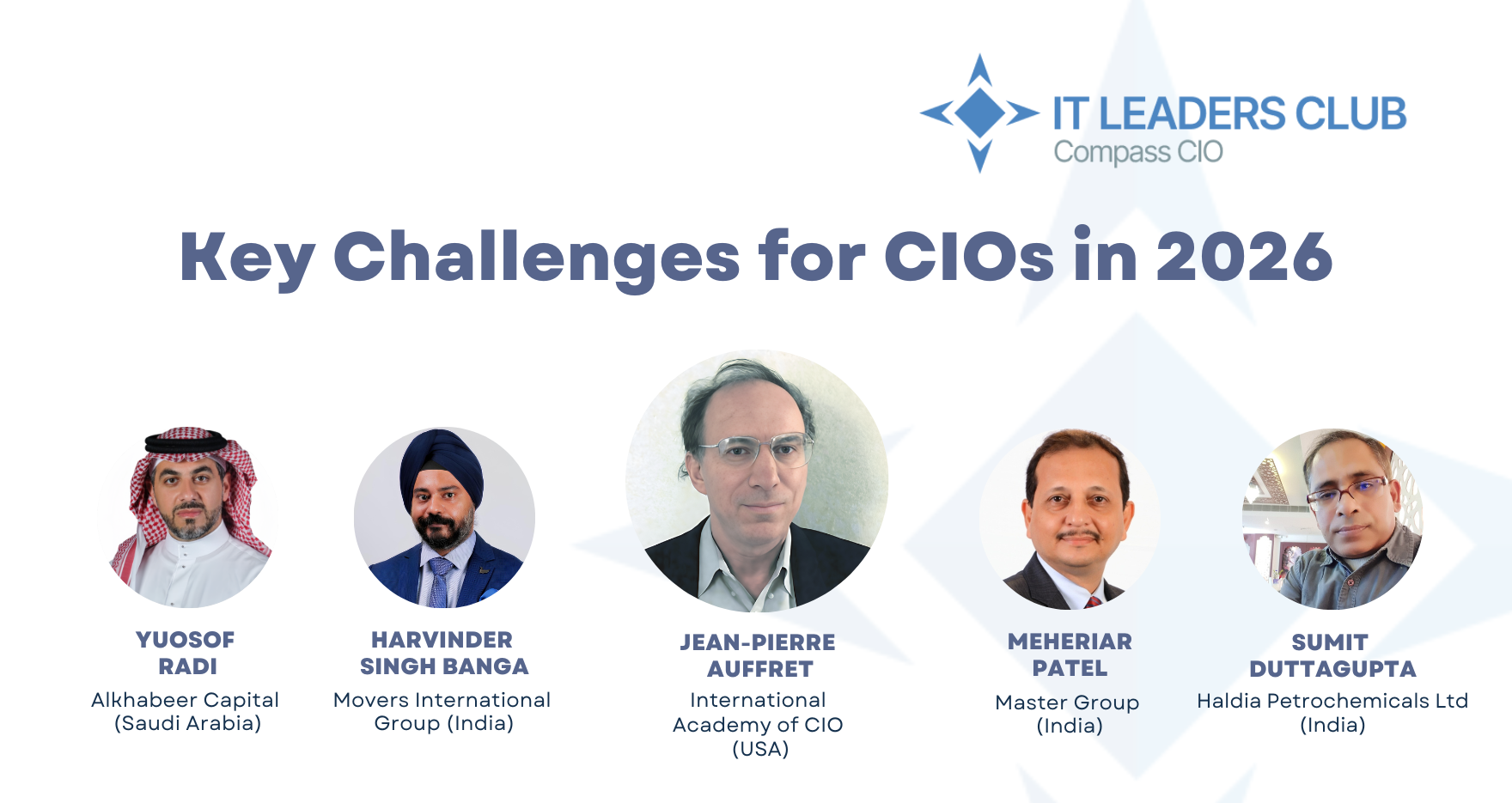
This summary draws on a Global CIO community panel discussion on how the CIO role is changing as AI moves from experimentation to execution. Across industries and regulatory environments, AI was framed not as a standalone technology agenda, but as a business issue shaped by governance, security, operating models, workforce readiness, and the ability to scale with control. A central theme was that CIOs are no longer expected simply to support implementation. They are increasingly expected to align technology with business priorities, manage risk, and turn AI ambition into business results.










Cases of the community members
View all cases



GITEX Global 2023 in October at the Emirates: from virtual policemen and farm bots to cases about autonomous retailing, GITEX Global has a huge focus on the use of AI this time around.

According to the statistics agency, the number of telecommunication and IT companies has increased 1.8 times in the last five years. At the beginning of 2023, there are more than 12 thousand ICT companies operating in the country. More than 100 thousand people are employed in the industry. At the end of 2022, the volume of ICT services grew by 125.5% and amounted to 22.9 trillion soums, of which 4.2 trillion soums were programming services provided by Uzbek companies and specialists. The total revenue of Uzbekistan's IT sector for the first quarter of 2023 reached 2.38 trillion soums - almost four times more than in the same period of 2022. Exports of digital services increased to $57.2 million. According to IT Park, net income amounted to more than 90% of revenue or 2.158 trillion soums.

Clouds offer companies great advantages. They allow for much faster ordering or relinquishment of resources than in the case of hardware; much more flexibility in budget planning, increasing or decreasing the cost of IT services.

One of the risks of an actively developing IT company is that as the staff expands, recruitment may turn from an individual approach into a conveyor belt. This negatively affects not only the quality of selection of employees for projects, but also the loyalty of the candidates themselves to the employer. Polina Kondakova, head of the recruitment department at iFellow, tells us why this happens and how to avoid it.

September was generous with news. From the distant counties of Australia to the forests of Canada, from sporting achievements to vendor announcements, this is how much the beginning of fall brought us.

Corporate software development is a complex and expensive process. For 30 years, it has required businesses to have an in-house development team or an experienced provider of "boxed" solutions for a specific business process. By 2026, more than 65% of the world's applications will be built without costly IT teams as low-code and no-code solutions rapidly take over the market.
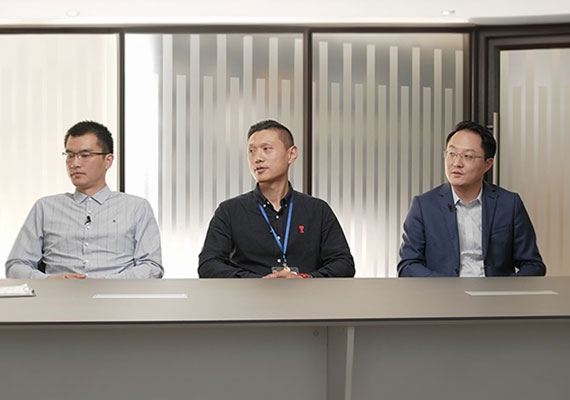
The editors of Global CIO portal organized a conversation with three IT executives from China: Zhang Jianhua, Lu Yang and Zhou Shengzhe, who agreed to answer a few questions and share their experience in digitalization, application of AI and use of big data.

“Project of the Year” is an annual contest which has been held by professional IT-community Global CIO since 2012. During this time it has become a key communication platform for CIOs and top managers who use automation and digitalization in their daily practice. In the last two years the contest has become international.

Global CIO has invited Oleg Vaynberg, who has experience in IT education in Australia and experience as a CIO, to tell what are the pros and cons of the Australian IT education system. Global CIO community thanks Oleg for his lecture.
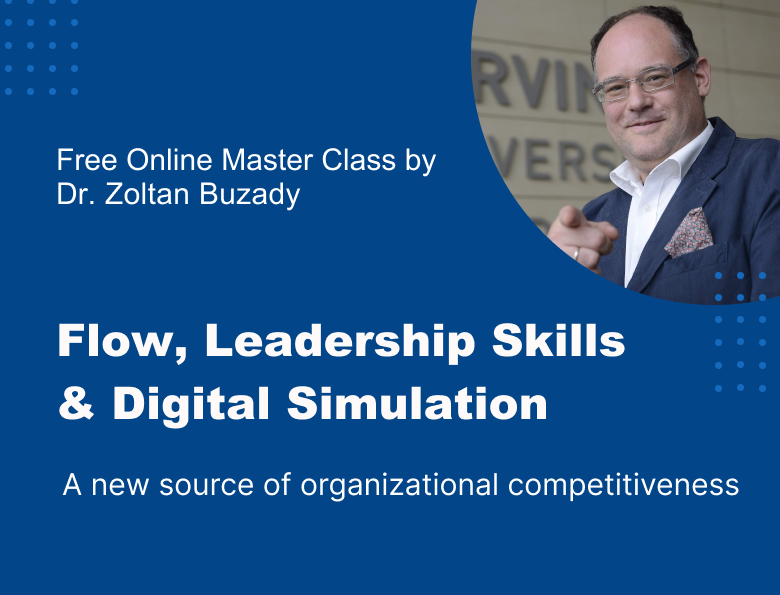
Global CIO has invited Zoltan Buzady, a professor at Corvinus University of Budapest, to share insights on how to enhance the effectiveness of work and organizational output through leadership qualities. The hour-long lecture flew by unnoticed, because it was filled with bright, inspiring examples, jokes, and useful instructions. Global CIO community thanks Zoltan Buzady for an interesting and useful webinar.

Now with the back-to-school season, it’s high time we started with something educational. Take, for example, the news from the chemistry.


The summer is time for plants and harvests. That is why we are starting this summary of AI and data analytics updates with the news from an Israeli kibbutz.

Let's talk about the principles of high-performance projects, whether any project can be made highly efficient, and if so, how. By combining the experience of the customer and the contractor, we identified 7 principles of highly effective projects.

It is difficult to fully assess the effectiveness of the implementation of the program “Digital Kazakhstan”, despite the large investments in digitalization, due to the lack of approaches to measure the digital economy. Nevertheless, according to a number of studies and international ratings mentioned in the review, certain initiatives have a good effect and have a positive effect on the economy of Kazakhstan as a whole.
Kazakhstan's economy is the largest in Central Asia. Kazakhstan is rich in mineral resources: the country ranks 12th in the world in oil reserves, 14th in gas reserves; Kazakhstan has 30 % of world reserves of chrome ore and 25 % of manganese ore; there are large reserves of tungsten and molybdenum. The vast territory of the country — Kazakhstan occupies the 9th place in the world by area — provides opportunities to create a strong agro-industrial complex. However, in our time, having a strong resource base alone is not enough for competitiveness on the international level in the economy.

Google's DeepMind has introduced a new AI specialist, RoboCat, to the market. The vendor claims that the system is capable of learning without supervision. RoboCat learns faster than the most advanced models. It can learn to perform a new task after just 100 demonstrations, as it has a huge dataset stuffed in it.